Editorial
The Cracks in INDIA: DMK’s Boycott and the Fragility of Opposition Unity
The Dravida Munnetra Kazhagam’s (DMK) decision to skip the INDIA bloc meeting on June 8, 2026, is more than a regional sulk — it is a symptom of the deeper structural weaknesses plaguing India’s opposition alliance. What began as a promising umbrella to counter the BJP’s dominance now risks unravelling under the weight of bruised egos, opportunistic calculations, and irreconcilable regional ambitions.
The immediate trigger was Congress’s swift pivot in Tamil Nadu after the April 2026 Assembly elections. The DMK-led Secular Progressive Alliance suffered a clear defeat, with actor Vijay’s Tamilaga Vettri Kazhagam (TVK) emerging as the single-largest party. Instead of standing by its long-time ally, Congress chose to back the TVK government with its five MLAs, ending a nearly two-decade-old partnership in the state. DMK leaders, including MK Stalin, described this as a “betrayal” that deeply hurt party cadres who had shared power and resources with Congress for years. The party’s subsequent boycott of the national opposition meet — explicitly avoiding any platform where Congress is present — signals that hurt has now translated into strategic distancing.
This rupture exposes the INDIA bloc’s fundamental paradox: it is an alliance of convenience stitched together primarily by anti-BJP sentiment rather than a shared vision or ironclad trust. Regional heavyweights like DMK have historically provided the bloc with crucial numbers and ideological heft on issues like federalism, social justice, and secularism. Yet when local electoral realities shift, national solidarity crumbles. Congress’s move in Tamil Nadu may have been tactically shrewd for short-term relevance, but it has eroded the very trust needed for sustained coordination in Parliament and beyond.
For DMK, the boycott allows it to reclaim agency. Having governed Tamil Nadu for years on a Dravidian model emphasizing welfare and autonomy, the party now faces pressure to regroup without being seen as subordinate to a weakened national partner. It has reiterated its commitment to opposing the BJP on key national issues, suggesting the exit is not a full divorce from opposition politics but a tactical separation from Congress-led platforms. However, prolonged isolation could diminish DMK’s influence in national discourse and weaken its bargaining power.
The broader implications for INDIA are concerning. With TMC also navigating its own challenges and other allies expressing quiet discontent, the bloc appears increasingly fragmented. In a political landscape where the ruling NDA projects cohesion and decisiveness, such public fissures hand the BJP a narrative of inevitability. Opposition unity was always going to be tested by state-specific compulsions, but repeated episodes of post-poll realignments risk turning the alliance into a paper tiger — loud in rhetoric, unreliable in practice.
True opposition effectiveness demands more than electoral arithmetic; it requires maturity, consistent principles, and mechanisms to resolve internal conflicts. DMK’s absence at the table is a warning bell. Unless Congress and regional parties invest in genuine dialogue and respect for each other’s core interests, the INDIA bloc may continue to lose not just seats, but credibility. Indian democracy thrives on robust checks and balances. A fractured opposition weakens that foundation, regardless of which side occupies the treasury benches.
Welcome Reform, But Is It Enough? CBSE’s Twice-a-Year Class 10 Boards
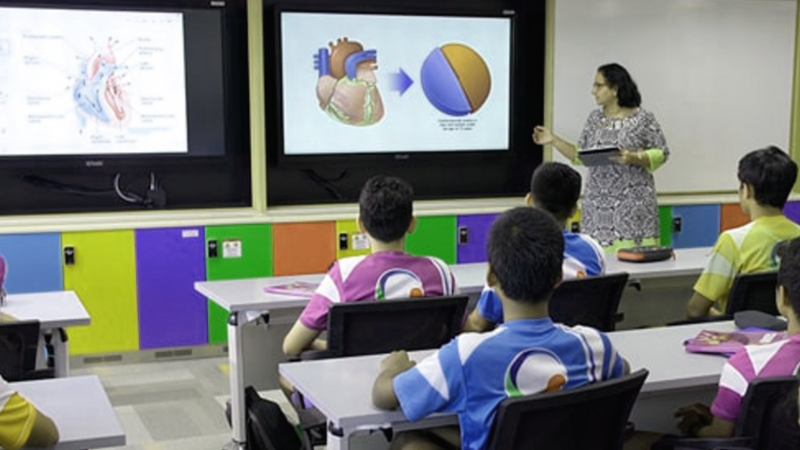
The Central Board of Secondary Education’s (CBSE) decision to conduct Class 10 board examinations twice a year starting 2026 marks a significant step towards reforming India’s high-stakes examination culture. With the first mandatory exam scheduled for February and an optional improvement window in May, the move aligns with the National Education Policy (NEP) 2020’s vision of reducing student stress and promoting genuine learning over rote performance.
This reform is long overdue. For decades, a single board exam in Class 10 has loomed as a make-or-break event, triggering anxiety, coaching dependency, and even mental health crises among adolescents. The new system offers a safety net: students can appear for improvement in select subjects, with the best score retained. It acknowledges that one bad day — due to illness, personal issues, or exam-day jitters — should not derail a young learner’s future. By lowering the “all-or-nothing” pressure, CBSE aims to shift focus from cramming to continuous preparation and conceptual clarity. Early indications suggest this could ease the transition to higher secondary education and reduce dropout risks for those who underperform initially.
Yet, optimism must be tempered with realism. While the intent is student-friendly, implementation challenges abound. Schools already stretched thin may struggle with doubled logistical burdens — scheduling, invigilation, evaluation, and infrastructure. Teachers, who often bear the brunt of repetitive exam cycles, could face burnout without adequate support or training. There is also a risk that the “second chance” becomes an excuse for complacency in the first attempt, or worse, fuels a parallel coaching industry promising targeted improvement modules. Parents, driven by competitive aspirations, might push children into preparing for both rounds, inadvertently heightening year-round stress rather than alleviating it.
Critics rightly question whether frequency alone addresses deeper flaws in our assessment system. True reform demands a shift to competency-based, formative evaluations that test understanding over memory. NEP 2020 envisions this broader transformation, including holistic progress cards and reduced curriculum load, but execution has been uneven. Without parallel investments in teacher capacity, mental health resources, and equitable access (especially in rural and under-resourced schools), the dual-exam model risks becoming a superficial tweak.
CBSE’s move signals progress towards a more compassionate education ecosystem. It recognizes that students are not machines optimized for one performance but growing individuals deserving flexibility. For this reform to succeed, however, it must be accompanied by robust safeguards: clear guidelines limiting subjects for improvement, transparent result processing via DigiLocker, and continuous feedback mechanisms. Ultimately, boards, schools, and families must collaborate to foster a culture where learning matters more than marks.
Indian education stands at a crossroads. If implemented thoughtfully, twice-yearly exams could mark the beginning of genuine de-stressing. If not, they may simply redistribute pressure. The coming years will reveal whether this policy truly empowers students or merely multiplies examination rituals. The goal remains clear: build resilient learners, not exam warriors.
 SAS Kirmani
Most Popular

Speed of light: The cosmic limit that shapes our universe
September 17, 2025
Beats did announce something, after all
September 17, 2025