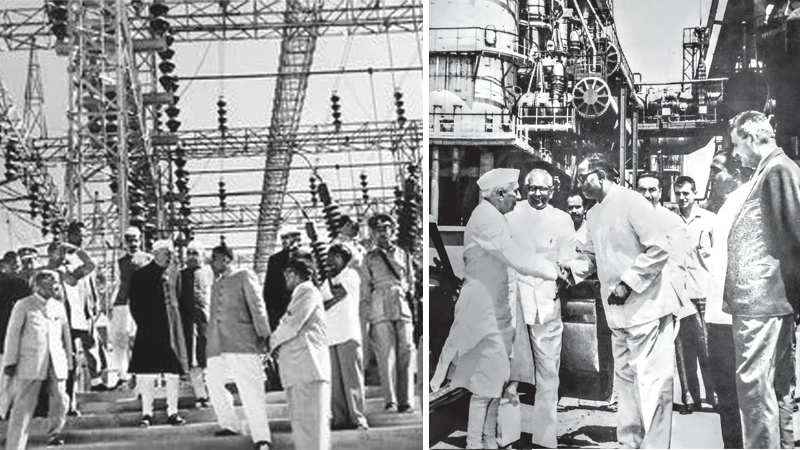
Indira Gandhi: The Iron Lady of India — Hard Work, Farsightedness and an Unyielding Will

Editorial
A Declaration Without Deals: The Trump-Xi-Putin Summit and the Limits of Optics
The first-ever trilateral meeting of Donald Trump, Xi Jinping and Vladimir Putin in Shenzhen has produced a “Declaration Towards Peace.” On paper, the document is ambitious. It calls for dialogue on nuclear-risk reduction, reform of the United Nations, expanded supplies of refined petroleum products, and restraint by international courts such as the ICC. In substance, it delivers little that is measurable. No arms-control framework was announced, no timelines were set, and no mechanism was created to turn rhetoric into verification. The gap between symbolism and substance is the real story.
For the three leaders, the meeting served clear political purposes. Trump could present himself as the indispensable deal-maker who can sit with adversaries without preconditions. Xi reinforced China’s claim to co-equal status among the great powers and hosted the gathering on Chinese soil. Putin, long isolated by Western sanctions and the ICC arrest warrant, gained the visual legitimacy of standing alongside the American and Chinese presidents. Each leader returned home with a photograph that domestic audiences can interpret as strength.
Yet the declaration’s language reveals more about what the three powers reject than what they are prepared to build. Criticism of the ICC and similar bodies reflects a shared discomfort with international judicial mechanisms that constrain sovereign action. The emphasis on petroleum supplies addresses energy security for China and revenue needs for Russia, while offering Trump a talking point on global prices. Nuclear-risk dialogue is welcome in principle, but history shows that such talks rarely progress without intrusive verification and reciprocal concessions—elements conspicuously absent here.
Sceptics reasonably ask whether a “peace declaration” that leaves the wars in Ukraine and the Middle East unaddressed can claim the name. Supporters counter that great-power communication itself is stabilising, and that rigid moral preconditions have previously closed channels. Both arguments contain partial truths. Communication without accountability risks becoming a platform for mutual validation rather than problem-solving. Accountability without communication risks escalation through miscalculation.
The larger question is whether the post-1945 institutional order can accommodate three nuclear powers that increasingly prefer bilateral or minilateral arrangements among themselves. The Shenzhen declaration does not answer that question. It merely confirms that the three leaders prefer to manage the international system on their own terms. Whether this produces greater stability or simply a more naked contest of power will depend less on the words they signed than on the actions they take—or refuse to take—in the months ahead.
Fire in Chattogram: A Warning for Bangladesh’s Fragile Transition
The burning of Muhammad Yunus’s ancestral house in Chattogram is more than an act of arson. It is a stark symptom of the unresolved political bitterness that continues to haunt Bangladesh months after the dramatic change of power in 2024. The Nobel laureate, who led the interim administration following Sheikh Hasina’s departure, has become a polarising figure. The attack on his family property, occurring amid speculation about Hasina’s possible return from India, reveals how quickly symbolic targets can reignite old hostilities.
Bangladesh’s political culture has long been marked by intense personalisation and cycles of retribution. The 2024 uprising raised hopes that the country might break from this pattern and move toward a more inclusive and rules-based politics. Those hopes are now under strain. When the home of a national figure who briefly held the highest civilian responsibility is set ablaze, it signals that large sections of the population still view politics as a zero-sum contest in which the defeated must be humiliated and the victors insulated from accountability.
The timing is particularly dangerous. Talk of Sheikh Hasina’s return has sharpened anxieties on all sides. Supporters of the former prime minister see her potential homecoming as a path to political rehabilitation. Opponents fear it could reopen wounds and reverse the gains of the uprising. In such an atmosphere, violence against symbols associated with either camp becomes a form of political messaging. It communicates that the conflict remains unresolved and that street power still rivals institutional authority.
This is precisely the moment when Bangladesh’s institutions must demonstrate their independence. The police, judiciary and local administration cannot appear selective in their response. Swift investigation, transparent prosecution and public communication are essential if citizens are to believe that the rule of law applies equally. Failure to act decisively will only encourage further vigilantism and deepen the culture of impunity that has damaged the country’s democratic credentials for decades.
External actors, including India, also have a stake in stability. Prolonged unrest in Bangladesh carries risks of refugee flows, radicalisation and disruption of economic ties. Yet the primary responsibility lies within Bangladesh itself. Political leaders across the spectrum must recognise that the country cannot afford another cycle of revenge. The fire in Chattogram should serve as a warning rather than a precedent. A stable Bangladesh requires not the elimination of rivals but the construction of institutions strong enough to contain them.
 SAS Kirmani
Most Popular

Speed of light: The cosmic limit that shapes our universe
September 17, 2025
Beats did announce something, after all
September 17, 2025