Editorial
The Iron Lady’s Finest Hour
Thirty-eight years after her death, Indira Gandhi remains India’s most consequential prime minister after Jawaharlal Nehru. On her 108th birth anniversary, it is fitting to recall not just the controversies that still divide us, but the moment when her steel was forged into legend: the war of 1971.
In March 1971, when Pakistan unleashed genocide in its eastern wing, Indira Gandhi did not flinch. While the world looked away or lectured India on restraint, she sheltered ten million refugees, trained the Mukti Bahini, and prepared the armed forces for the inevitable. When Nixon and Kissinger tilted shamelessly toward Islamabad and despatched the Seventh Fleet to the Bay of Bengal, she stared down the superpower. On 3 December 1971, Pakistan attacked first; within thirteen days, 93,000 Pakistani soldiers surrendered in Dhaka. Bangladesh was born, and the map of South Asia changed forever.
That victory was no accident. It was the result of ruthless clarity: diplomatic isolation of Pakistan, a treaty with the Soviet Union that checkmated China and America, and lightning military campaigns in both theatres. Indira emerged as the undisputed Iron Lady, the only leader in the world who could defeat a nuclear-backed adversary and midwife a new nation in less than a fortnight.
The 1971 war was Indira Gandhi at her best: courageous, decisive, strategically brilliant, and unapologetically protective of India’s interests. It proved that a woman in a white sari could command armies and humble generals. Much else in her record (the Emergency, the Punjab tragedy, dynastic excesses) remains bitterly contested. But on the banks of the Meghna, in the surrender ceremony at Ramna Race Course, and in the roar of a billion Indians celebrating Vijay Diwas, her place in history was sealed.
On 19 November, we salute not the myth, but the mortal who, in India’s darkest hour, gave us our brightest
Transforming Education: The Rise of AI-Enabled Classrooms
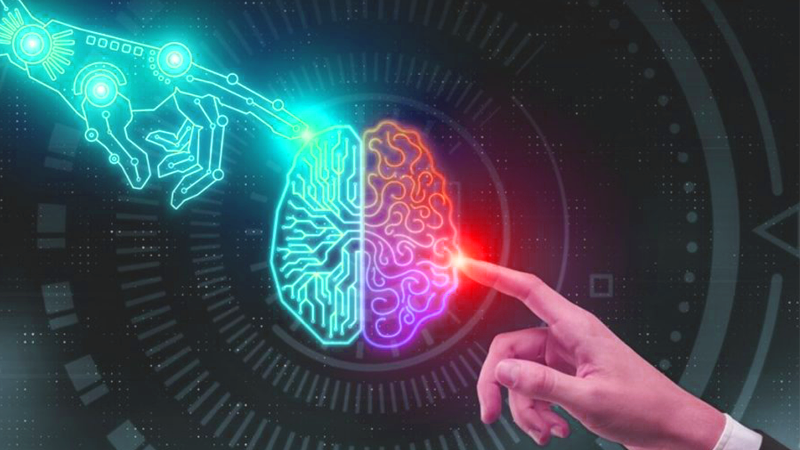
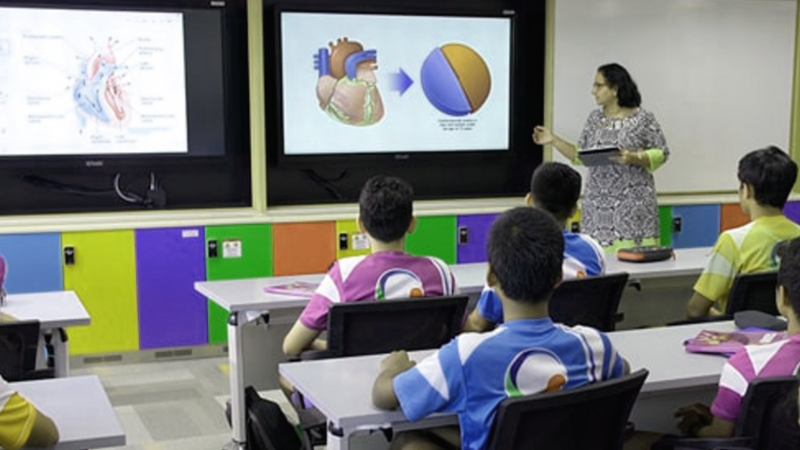
Education is on the edge of a defining transformation. Artificial Intelligence, once a distant concept, is now reshaping classrooms, teaching methods, and the learning experience itself. As schools increasingly adopt AI-enabled tools, it is essential to reflect not just on what technology can do, but on what it should do for the future of education.
AI offers a powerful promise: personalised learning. For decades, teaching has been based on uniform instruction, even though no two children learn the same way. AI finally breaks this barrier. Intelligent systems can analyse a child’s strengths and weaknesses, recommend exercises, and provide instant feedback. A student who struggles with algebra or language comprehension can receive tailored support without fear or hesitation. This is a significant shift from the one-size-fits-all model that has dominated traditional classrooms.
Yet, the rise of AI does not diminish the importance of teachers. In fact, it places them at the very centre of the learning ecosystem. When machines take over repetitive tasks—grading, generating worksheets, monitoring progress—teachers can focus on what truly matters: mentoring, motivating, and nurturing curiosity. No machine can replace the compassion, moral guidance, and emotional intelligence that a human teacher brings. The classroom of the future must therefore be a partnership, not a competition, between teachers and technology.
However, this transition comes with concerns that must be acknowledged. The digital divide remains real. While private and urban schools may rapidly adopt AI tools, many government and rural schools still struggle with basic infrastructure. If AI-driven education is to be inclusive, governments must invest in devices, connectivity, and teacher training. Equally important is data privacy. AI systems rely on student information, and protecting this data must be a non-negotiable priority.
The purpose of education is also evolving. In an age where machines can store information and perform routine tasks, the value of learning lies in critical thinking, creativity, ethics, and adaptability. Classrooms must encourage students to question, explore, and innovate—skills that AI cannot replicate but will increasingly demand.
AI is neither a miracle cure nor a threat. It is a transformative tool. Used wisely, it can democratise quality education, empower teachers, and prepare students for a rapidly changing world. The challenge is to ensure that while technology advances, the heart of education—human connection, values, and character—remains firmly intact.
The age of AI is here. Our classrooms must evolve—but without losing the humanity that makes learning meaningful.

 SAS Kirmani
Most Popular

Speed of light: The cosmic limit that shapes our universe
September 17, 2025
Beats did announce something, after all
September 17, 2025