Editorial
New Delhi’s AI Moment: Redefining Responsible Intelligence for the World
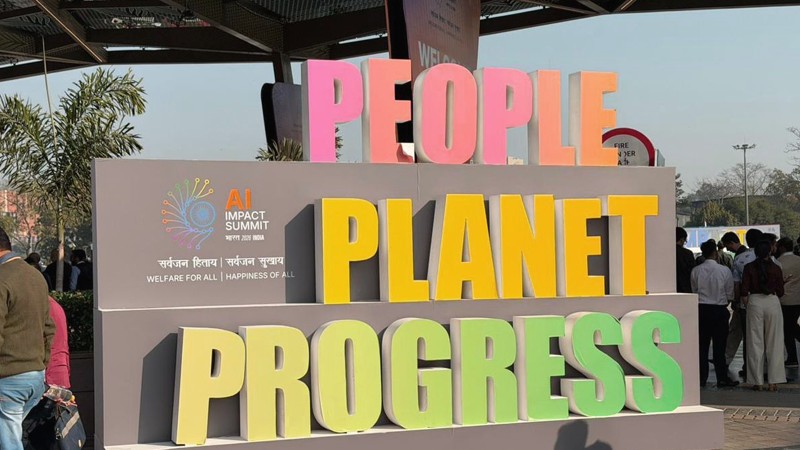
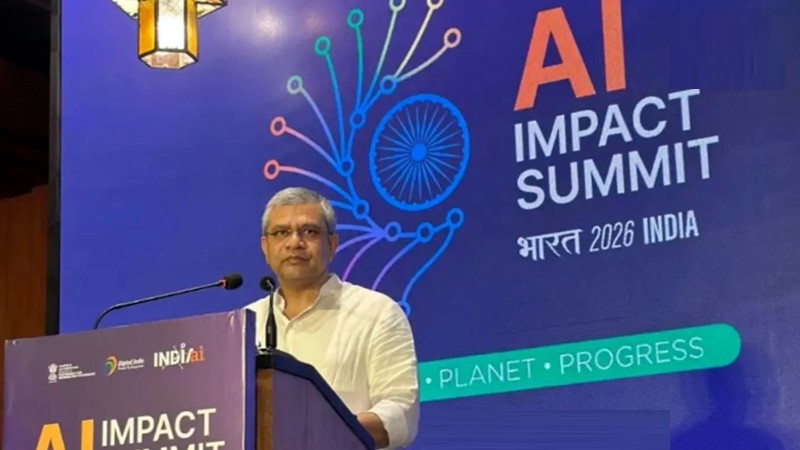
The India AI Impact Summit 2026, currently underway in New Delhi from February 16 to 20 at Bharat Mandapam, represents a pivotal moment for global artificial intelligence discourse. As the first major international AI summit hosted in the Global South, it underscores India’s rising stature in shaping responsible, inclusive, and impactful AI development. Prime Minister Narendra Modi’s inauguration and hands-on exploration of exhibits—showcasing practical innovations like healthcare robots, agricultural drones, and advanced language translation tools—highlight a vision where technology serves humanity rather than merely advancing corporate interests.
The summit’s scale is unprecedented: over 20 heads of state, 60 ministers, 500 global AI leaders, 300+ exhibitors from 30+ countries, and expectations of 250,000 visitors reflect broad international buy-in. Leaders like French President Emmanuel Macron, Brazilian President Luiz Inácio Lula da Silva, and tech CEOs from Google, OpenAI, Microsoft, and others are participating, signaling a shift toward collaborative governance. Discussions with over 30 nations on safeguards against AI misuse—addressing deepfakes, bias amplification, child safety risks, and job displacement—demonstrate proactive multilateralism. Anchored in the principles of “People, Planet, and Progress,” the event prioritizes inclusive growth, sustainable development, and equitable access to AI infrastructure, including compute resources and data.
India’s approach stands out for its emphasis on real-world applications tailored to developmental needs. Exhibits and sessions explore AI’s role in transforming agriculture through precision drones, enhancing healthcare diagnostics via robotics, and bridging linguistic divides with translation tools—directly addressing challenges in a diverse, populous nation. Initiatives like the YUVAi youth challenge and AI by HER gender-focused program further promote grassroots innovation, ensuring AI benefits extend beyond urban elites to rural and marginalized communities.
Yet, the summit also confronts uncomfortable realities. Amid excitement, concerns about organizational hiccups on opening day—long queues and overcrowding—remind us that scaling ambition requires flawless execution. Broader debates on AI ethics remain critical: how to balance rapid innovation with robust safeguards against misuse, ensure fair data governance, and mitigate economic disruptions in labor markets.
Ultimately, this summit transcends a mere gathering; it is India’s bold assertion of leadership in redefining AI as a force for welfare (“Sarvajan Hitaya, Sarvajan Sukhaya”). By fostering a shared roadmap for global collaboration, it positions the Global South not as a passive recipient but as an active architect of the AI future. If successful, the outcomes—policy frameworks, partnerships, and scalable solutions—could accelerate equitable progress worldwide, proving that technology, when guided responsibly, can truly uplift all of humanity.
Stalemate in Geneva: Iran’s Nuclear Talks Teeter on the Edge of Diplomacy or Disaster
As Iranian Foreign Minister Abbas Araghchi arrived in Geneva on February 16, 2026, for the second round of indirect nuclear negotiations with the United States—mediated once again by Oman—the atmosphere was thick with tension rather than optimism. These talks, resuming after an initial round in Muscat earlier in February, aim to revive a framework for curbing Iran’s nuclear program in exchange for sanctions relief. Yet, with few tangible signs of compromise emerging from either side, the high-stakes diplomacy risks collapsing into renewed confrontation.
Araghchi, a seasoned negotiator with deep experience from the JCPOA era, struck a measured but firm tone upon landing. Posting on X, he declared he was in Geneva armed with “real ideas to achieve a fair and equitable deal,” while emphatically stating: “What is not on the table: submission before threats.” This reflects Tehran’s consistent position—no zero enrichment, no capitulation to military intimidation—amid Iran’s advanced uranium enrichment to near-weapons-grade levels. Iranian officials, including Deputy Foreign Minister Majid Takht-Ravanchi, have signaled openness to compromises if the U.S. addresses sanctions lifting and delivers economic benefits, potentially extending to energy, mining, and aircraft deals. However, Washington’s demands remain maximalist: complete cessation of enrichment, curbs on ballistic missiles, and restrictions on regional proxies—issues Tehran views as non-negotiable red lines.
The backdrop to these discussions is alarmingly militarized. Just hours before the talks, Iran’s Islamic Revolutionary Guard Corps (IRGC) launched live-fire naval exercises in the Strait of Hormuz, dubbed “Smart Control of the Strait of Hormuz.” These drills, testing naval readiness to counter perceived threats, serve as a clear deterrent signal, demonstrating Iran’s ability to disrupt global oil flows through this critical chokepoint. On the U.S. side, President Donald Trump has escalated rhetoric and posture dramatically: deploying a second aircraft carrier to the region, preparing contingency plans for sustained military operations (potentially weeks-long), and openly endorsing regime change as the “best thing” for Iran. Threats of further strikes—echoing last year’s U.S.-Israeli bombings of Iranian nuclear sites—hang over the negotiations like a sword.
Israel’s pressures add another volatile layer. Prime Minister Benjamin Netanyahu’s alignment with Trump’s hardline stance has intensified calls for preemptive action, framing any Iranian concessions as insufficient without verifiable dismantlement.
The impasse underscores a deeper clash of bargaining styles and strategic realities. Iran’s “patience and poker face”—as described by analysts familiar with Araghchi’s approach—contrasts with Washington’s blunt, threat-backed diplomacy. Both sides recognize the stakes: a failed deal could ignite a regional war, with catastrophic consequences for global energy markets, Middle East stability, and nuclear proliferation risks.
Yet hope flickers faintly. The involvement of Omani mediators, IAEA Director-General Rafael Grossi’s recent meeting with Araghchi for technical discussions, and mutual acknowledgment that diplomacy remains preferable to war suggest a narrow path forward. For progress, concessions are essential: Iran must offer verifiable limits on its program, while the U.S. must provide credible sanctions relief without preconditions that amount to surrender.
As the Geneva talks unfold on February 17, the world watches a familiar cycle—diplomacy shadowed by saber-rattling. Without mutual flexibility, this round may prove not a breakthrough, but another missed opportunity in a decades-long saga that inches perilously closer to conflict.
 SAS Kirmani
Most Popular

Speed of light: The cosmic limit that shapes our universe
September 17, 2025
Beats did announce something, after all
September 17, 2025