Editorial
Bihar’s Verdict: A Mandate for Stability, A Lesson in Alliance Politics
The Bihar Assembly results — BJP 89, JD(U) 85, Mahagathbandhan 35, AIMIM 5, BSP 1 — offer more than a numerical shift; they reveal a deeper political churn underway in one of India’s most politically complex states. The NDA’s emphatic majority underscores a decisive public preference for stability and governance, while the Opposition’s collapse signals a strategic misreading of the ground.
The most important question emerging from this verdict is whether the Mahagathbandhan paid the price for not aligning with AIMIM. On the surface, AIMIM’s five-seat win may look small, but its impact is magnified in tightly contested constituencies where minority votes are pivotal. By shutting AIMIM out, the Opposition bloc weakened its hold over several Muslim-majority segments that traditionally align with anti-NDA forces. Yet, this is only part of the story. The Mahagathbandhan’s failure was broader — weak seat-sharing negotiations, lack of local synergy, and an uninspiring campaign that couldn’t match the NDA’s messaging on development and governance. The electorate’s verdict suggests that the Opposition’s attempts at building a “rainbow coalition” lacked both vision and coordination.
Meanwhile, within the NDA, the results have given rise to another question: who will occupy the Chief Minister’s chair — BJP or JD(U)? Though the BJP has emerged as the single largest party with 89 seats, JD(U)’s 85-seat performance reinforces its indispensability in Bihar’s political architecture. Nitish Kumar’s long administrative experience and his ability to maintain caste-community equilibrium in governance give JD(U) a natural claim to leadership. The BJP may have the numerical advantage, but alliance politics often operates beyond arithmetic; it depends on continuity, trust, and stability. Nitish Kumar, therefore, remains the most likely choice for Chief Minister — a signal that the NDA values cohesion over aggressive expansion.
For Bihar, the verdict reflects a maturing democracy where governance, welfare delivery, and credible leadership outweigh mere slogans or identity-based mobilization. The NDA succeeded because it offered a narrative of continuity and development, while the Opposition failed to present a convincing alternative. The Mahagathbandhan now faces a critical juncture: either reinvent itself through coherent alliances and grassroots strategy, or risk further marginalisation.
Ultimately, Bihar’s election is a lesson carved in political realism. Stability won, strategy lost — and the state’s electorate reminded every political actor that alliances are not arithmetic arrangements but instruments of trust, inclusion, and clarity of purpose.
Gen Z: A Generation Rewriting the Rules
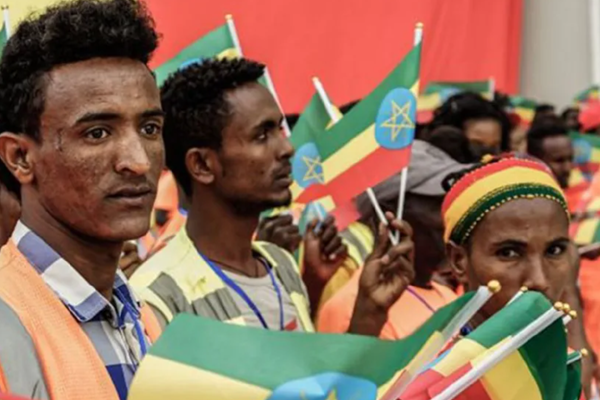
Generation Z—those born roughly between 1997 and 2012—has emerged as one of the most influential and disruptive cohorts in recent history. They are the first true digital natives, raised in a world where smartphones, social media, and instant access to information are not innovations but basic infrastructure. As India and the world navigate a period of rapid social, political, and technological flux, Gen Z stands at the frontline, challenging old assumptions, reshaping institutions, and rewriting the rules of engagement.
What distinguishes Gen Z most sharply from earlier generations is its extraordinary exposure to global ideas. With an internet-enabled worldview, they are more aware of climate change, inequality, mental health, and geopolitical tensions than any generation before them at a similar age. This awareness has made them socially conscious, outspoken, and deeply skeptical of established authority. On issues such as gender identity, caste, race, and environmental justice, Gen Z pushes for inclusivity and transparency, refusing to accept outdated norms.
Yet, Gen Z is not merely idealistic. They are also pragmatic. Unlike millennials, who often inherited optimism from the pre-digital era, Gen Z grew up amid economic turbulence, job insecurity, and a hypercompetitive world. As a result, they value financial stability, flexible work, and entrepreneurial avenues. The rise of the creator economy, gig work, and digital-first careers reflects their willingness to break from traditional paths.
But every strength carries its contradictions. The same digital landscape that empowers Gen Z also overwhelms them. Social media, while enabling expression, fuels anxiety, comparison, and performative outrage. Their political engagement, though energetic, can sometimes slip into tribalism—formed not through deep ideology but algorithm-driven echo chambers. Mental health concerns are alarmingly high, making emotional resilience a defining challenge for the generation.
In India, Gen Z is particularly important: it forms a massive demographic force poised to shape the nation’s future. Politically, they resist simplistic narratives; socially, they demand dignity and rights; culturally, they blend tradition with global identity; economically, they are digital accelerators. They are both a disruption and an opportunity.
Gen Z may not have all the answers, but it is undeniably rewriting the questions. Their worldview—restless, critical, inventive, and diverse—signals not a crisis but a transformation. As India and the world brace for an uncertain future, Gen Z’s courage to challenge the status quo may become the generation’s greatest contribution.

 SAS Kirmani
Most Popular

Speed of light: The cosmic limit that shapes our universe
September 17, 2025
Beats did announce something, after all
September 17, 2025