Editorial
Building Tomorrow, Petal by Petal: India’s BRICS Presidency Begins
The unveiling of India’s official BRICS Presidency 2026 logo by External Affairs Minister S. Jaishankar marks a symbolic and strategic milestone as the country assumes leadership of this influential grouping. Timed on the eve of Makar Sankranti—a festival embodying renewal, hope, and collective goodwill—this launch underscores India’s vision for a “humanity-first” and people-centric approach to global cooperation.
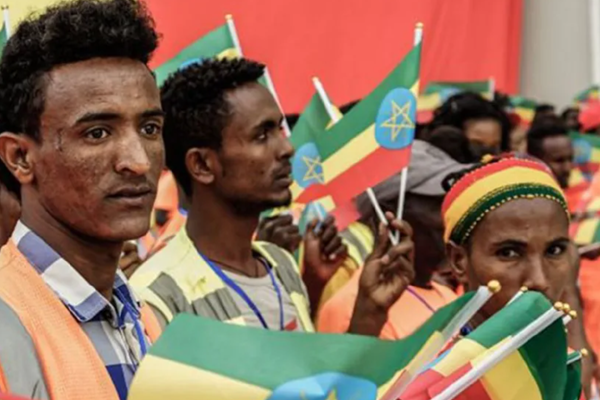
BRICS, founded in 2006 by Brazil, Russia, India, China, and South Africa, completes its 20th anniversary in 2026. Over two decades, it has transformed from an economic acronym into a dynamic platform representing nearly half the world’s population, about 40% of global GDP, and a significant share of international trade. The grouping’s expansion to include Egypt, Ethiopia, Iran, the UAE, and Indonesia as full members reflects its adaptability to shifting global realities, evolving into a counterweight to traditional Western-dominated institutions while prioritizing dialogue, practical collaboration, and development for the Global South.
The new logo, inspired by India’s national flower—the lotus—beautifully encapsulates this moment of unity in diversity. Designed through an open contest and selected from submissions, it features vibrant petals in the colors of all BRICS members, symbolizing collective strength while honoring individual identities. At its heart lies the “Namaste” gesture, formed by inner petals, evoking respect, welcome, and mutual cooperation. This blend of tradition and modernity conveys resilience and shared purpose, aligning perfectly with India’s civilizational ethos of inclusivity and harmony.
Accompanying the logo is the presidency’s theme: “Building for Resilience, Innovation, Cooperation and Sustainability”. These four pillars provide a coherent framework across BRICS’ foundational areas—political and security, economic and financial, and cultural and people-to-people exchanges. India aims to strengthen capacities in critical domains like agriculture, health, disaster management, energy, and supply chains; harness emerging technologies through startups and SMEs; deepen practical partnerships; and ensure sustainable progress that benefits all, particularly developing nations.
The simultaneous launch of the official website (brics2026.gov.in) serves as a transparent digital hub for disseminating information on meetings, initiatives, and outcomes, fostering greater engagement among members, partners, and the public.
In a world grappling with geopolitical volatility, economic uncertainties, climate risks, and technological disruptions, India’s BRICS chairship—its fourth since 2012—offers an opportunity to champion reformed multilateralism. Guided by Prime Minister Narendra Modi’s vision, it emphasizes inclusive solutions that respect national priorities and promote global welfare. As Jaishankar aptly noted, this presidency arrives at a pivotal juncture, where BRICS can amplify the voice of the Global South and contribute meaningfully to a more equitable world order.
Ultimately, the logo and theme are more than visual or rhetorical elements; they signal India’s commitment to turning two decades of BRICS evolution into actionable progress for shared prosperity and stability.
Ongoing Global Crises — Sudan faces severe humanitarian disaster
The world enters 2026 amid a cascade of interlocking crises that expose the fragility of global stability, where humanitarian disasters, geopolitical maneuvers, and unilateral interventions collide with devastating consequences. At the forefront stands Sudan, marking over 1,000 days of brutal civil war between the Sudanese Armed Forces (SAF) and the Rapid Support Forces (RSF). This conflict has birthed the planet’s largest humanitarian emergency: an estimated 33.7 million people—two-thirds of the population—require urgent aid in 2026, with over 20 million needing health assistance and 21 million facing acute food insecurity.
The health system teeters on collapse, ravaged by attacks on infrastructure, widespread disease outbreaks (cholera across all 18 states, dengue, malaria, measles), and severe malnutrition affecting children at alarming rates—one treated every six minutes in parts of North Darfur alone. Displacement has reached unprecedented levels, with nearly one in three Sudanese uprooted (over 15 million total, including 11.58 million internally), creating the world’s fastest-growing and largest displacement crisis. Restricted access, funding shortfalls, and ongoing violence in Darfur and Kordofan regions exacerbate the suffering, turning what began as a power struggle into a symbol of the “New World Disorder,” where civilians bear the brunt while international response falters.
Compounding global tensions, the United States has escalated designations of Muslim Brotherhood branches in Egypt, Jordan, and Lebanon as terrorist organizations. Announced in mid-January 2026, the Treasury and State Departments labeled the Egyptian and Jordanian chapters as Specially Designated Global Terrorists for alleged support to Hamas, while the Lebanese branch (al-Jamaa al-Islamiyah) received the stricter Foreign Terrorist Organization status. This move, part of a broader effort to curb perceived threats to U.S. partners like Israel, has drawn mixed reactions: welcomed by Egypt, condemned by others as politically motivated, and sparking domestic crackdowns in states like Texas and Florida against related groups. Critics warn it risks alienating moderate Islamist elements and inflaming regional divides in an already volatile Middle East.
The fallout from the U.S. intervention in Venezuela—a dramatic January 3, 2026, military operation that captured President Nicolás Maduro and his wife Cilia Flores—continues to reverberate. Dubbed Operation Absolute Resolve, the strikes targeted infrastructure and led to Maduro’s extradition to face U.S. charges of narcoterrorism. While some regional actors (e.g., Peru) hailed it as a step toward democracy, most Latin American nations, the UN, and experts condemned it as a violation of sovereignty and international law, likening it to past imperial interventions. Post-capture chaos includes repressive checkpoints by pro-regime colectivos, self-censorship, journalist arrests, and fears of paramilitary violence or spillover from groups like Colombia’s ELN. The intervention has frozen Venezuela’s Essequibo territorial claims against Guyana, boosted oil sector interest, but deepened humanitarian strains amid economic collapse and potential refugee flows.
These crises—Sudan’s slow-motion catastrophe, the ideological targeting of Islamist networks, and unilateral regime-change in Latin America—highlight a troubling pattern: eroding multilateral norms, insufficient humanitarian funding, and great-power actions that prioritize strategic gains over civilian protection. As conflicts interconnect through displacement, resource competition, and proxy influences, the international community must urgently prioritize diplomacy, unfettered aid access, and accountability. Without concerted pressure for ceasefires, inclusive dialogue, and reformed global responses, 2026 risks seeing these disasters deepen, with millions paying the price for a fractured world order.
 SAS Kirmani
Most Popular

Speed of light: The cosmic limit that shapes our universe
September 17, 2025
Beats did announce something, after all
September 17, 2025