Editorial
India’s BRICS Moment: Steering Multipolarity with Purpose
As India hosts the BRICS Foreign Ministers’ Meeting in New Delhi on May 14-15, 2026, under its chairship, the event transcends routine diplomacy. Chaired by External Affairs Minister Dr. S. Jaishankar, with participation from full members and partner countries, and likely interactions with Prime Minister Narendra Modi, the gathering offers a platform to shape a more inclusive global order amid geopolitical flux.
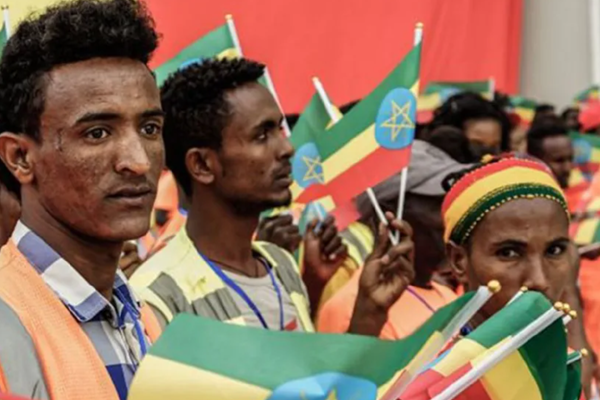
India’s 2026 theme — “Building for Resilience, Innovation, Cooperation and Sustainability” — with its “Humanity First” ethos, reflects a pragmatic, people-centric vision. In a world grappling with trade tensions, supply chain vulnerabilities, regional conflicts, and uneven post-pandemic recovery, BRICS represents nearly half the world’s population and a growing share of global GDP. The expanded grouping, now including Egypt, Ethiopia, Iran, UAE, Indonesia, and others alongside original members, plus partner nations like Thailand, Vietnam, and Nigeria, amplifies the voice of the Global South.
This meeting arrives at a critical juncture. Heightened uncertainties in West Asia, disruptions in energy markets, protectionist tariffs, and pressures on multilateral institutions demand coordinated responses. India is well-positioned to bridge divides. Unlike some members more aligned with confrontational narratives, New Delhi consistently advocates multipolarity without outright anti-Western posturing. It pushes for reforms in global governance — particularly the UN Security Council and international financial institutions — while promoting practical cooperation in digital public infrastructure, pharmaceuticals, critical minerals, clean energy, and AI governance.
Expect discussions on economic resilience, including local currency trade mechanisms, supply chain diversification, and strengthening the New Development Bank. Innovation in fintech, digital economies, and sustainable development will feature prominently. Terrorism, a red line for India, should see strong collective condemnation as a principle, not convenience. The presence of diverse members offers opportunities to address food-energy security and climate action, areas where BRICS can deliver tangible outcomes beyond rhetoric.
Challenges persist. Internal divergences on geopolitical issues, varying economic priorities, and the risk of dominance by larger players could dilute effectiveness. India’s diplomatic finesse will be key in forging consensus and ensuring expansion translates into influence rather than fragmentation.
This ministerial meeting previews the September BRICS Summit and underscores India’s rising global stature. By championing inclusive growth and institutional reform, New Delhi can help evolve BRICS into a constructive force for stability. In an era of uncertainty, India’s leadership offers a steadying hand — pragmatic, development-focused, and rooted in the belief that a multipolar world must also be a cooperative one.
Pakistan’s Diplomatic Tightrope: Transparency Over Speculation in the Iran Affair
Pakistan’s swift rejection of a CBS News report alleging that Iranian military aircraft were parked at Nur Khan Airbase near Rawalpindi to shield them from potential US strikes is a necessary clarification amid heightened regional sensitivities. The Foreign Office has categorically described the claims as “misleading and sensationalised,” asserting that the Iranian (and American) aircraft arrived post-ceasefire for logistical support during the Islamabad-mediated talks — ferrying diplomats, security personnel, and staff — and have no connection to any military protection scheme.
This episode underscores the delicate balancing act Pakistan is performing. Positioned as a mediator between Washington and Tehran during the recent US-Iran conflict, Islamabad finds itself vulnerable to accusations of playing a double game. Nur Khan Airbase, located in a densely populated area, makes large-scale concealment implausible, as Pakistani officials themselves noted. The presence of aircraft from both sides for diplomatic purposes aligns with the practical realities of hosting peace talks, yet the optics invite scrutiny in a geopolitically charged environment.
Pakistan’s role in brokering dialogue between the US and Iran has been constructive, especially given its relationships with both nations and its stakes in regional stability. The 2026 conflict — marked by strikes, disruptions in the Strait of Hormuz, and fragile ceasefires — threatened energy security and economic fallout far beyond West Asia. By facilitating talks in Islamabad, Pakistan demonstrated diplomatic utility at a time when traditional mediators faced credibility gaps. Dismissing unverified narratives that undermine these efforts serves Pakistan’s interest in being seen as a responsible actor rather than a partisan one.
However, the incident also highlights broader challenges. In an era of intense information warfare, anonymous official sourcing in Western media can quickly shape perceptions, forcing reactive diplomacy. Pakistan must maintain rigorous transparency — perhaps through greater openness on logistics and timelines — to safeguard its mediator credentials. Relations with the US remain vital for economic and security cooperation, while ties with Iran involve border management, trade, and counter-terrorism. Overplaying any side risks alienating the other.
Ultimately, this episode is a reminder that mediation demands credibility above all. Pakistan should continue emphasising its commitment to peace, rule-based conduct, and de-escalation. Speculative reporting should not derail genuine diplomatic gains. In a multipolar world where middle powers like Pakistan are increasingly called upon, clear communication and consistent policy will determine whether such roles enhance influence or invite suspicion. Islamabad’s firm rebuttal is a step in the right direction — now it must be matched by proactive diplomacy that reinforces trust with all stakeholders.
 SAS Kirmani
Most Popular

Speed of light: The cosmic limit that shapes our universe
September 17, 2025
Beats did announce something, after all
September 17, 2025