Editorial
Historic Milestone in Indian Democracy
Prime Minister Narendra Modi’s achievement of becoming India’s longest-serving elected Prime Minister marks a significant chapter in the nation’s political history. Having completed over 4,399 consecutive days in office since assuming power on May 26, 2014, Modi has surpassed Jawaharlal Nehru’s record of 4,398 days. This milestone, occurring amid a period of notable domestic and international developments, has drawn widespread congratulations from NDA allies, opposition voices acknowledging the feat, and global leaders who recognise Modi’s influence on the world stage.
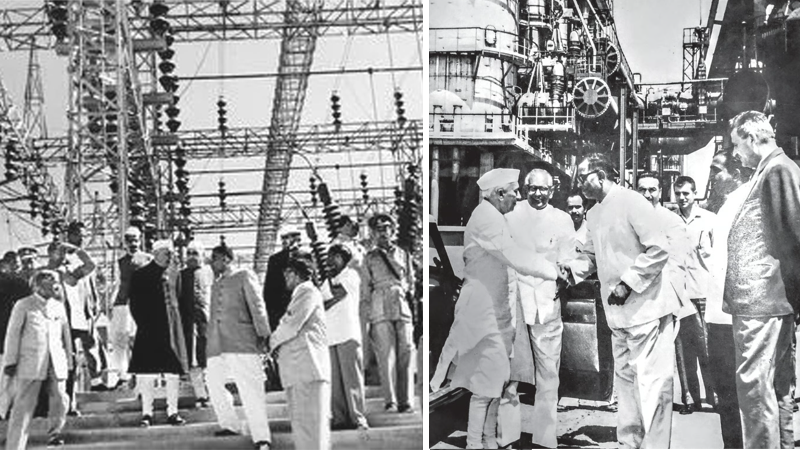
Nehru, India’s first Prime Minister, steered the young republic through its formative years, laying the foundations of democratic institutions, secularism, and planned economic development. Modi’s tenure, by contrast, reflects a different era—one defined by decisive governance, digital transformation, and assertive nationalism. From the abrogation of Article 370 to the successful rollout of schemes like PM-KISAN, Ayushman Bharat, and the push for Atmanirbhar Bharat, his government has prioritised welfare delivery, infrastructure modernisation, and economic self-reliance. The expansion of India’s global footprint—through stronger Quad partnerships, G20 leadership, and vaccine diplomacy—has elevated the country’s stature.
This longevity in office underscores the stability voters have repeatedly endorsed. In an age of coalition-era fragility and short-lived governments, Modi’s three consecutive terms signal a shift towards mandate-driven governance. His leadership style—marked by direct communication via Mann Ki Baat, extensive grassroots outreach, and technology-enabled welfare—has reshaped the relationship between the citizen and the state. Critics, however, argue that this centralisation has sometimes strained federalism and institutional autonomy, raising questions about democratic checks and balances.
Yet, the record itself is a testament to the resilience of Indian democracy. Electoral success at this scale demands sustained public trust, effective campaign machinery, and adaptive policy responses to challenges ranging from the COVID-19 pandemic to geopolitical tensions. As India navigates economic headwinds, energy security concerns, and regional stability issues, Modi’s continued stewardship will be tested on delivering equitable growth and social harmony.
Congratulations pouring in from NDA partners and international figures reflect both political goodwill and recognition of India’s rising profile. This milestone is not merely about duration but about the transformation India has witnessed. As the nation looks ahead, the focus must remain on inclusive development, strengthening institutions, and upholding the democratic ethos that made such political longevity possible.
In celebrating this achievement, India reaffirms its faith in the ballot over the bullet, and in leadership that seeks to convert continuity into lasting progress. The coming years will determine how this record translates into a stronger, more prosperous republic.
The Perils of Political Poaching in Indian Democracy
The Congress party’s move to relocate its Madhya Pradesh MLAs to Karnataka ahead of the Rajya Sabha polls on June 18 highlights a persistent challenge in Indian politics: the practice of poaching legislators to influence electoral outcomes. Faced with concerns over alleged attempts by the BJP to sway its members, the Congress has taken this step to protect its strength for the crucial third seat. While such tactical manoeuvres are not new, they underscore the need to address the deeper issue of defections and horse-trading that continue to undermine democratic integrity.
Political poaching, often referred to as “resort politics,” has become a recurring feature across parties and states. Legislators elected on specific party platforms are reportedly lured with ministerial positions, financial incentives, or other inducements to switch allegiance. This trend raises serious ethical questions, as it treats elected representatives as assets to be acquired rather than custodians of the voters’ mandate. When MLAs are shifted across state borders to prevent cross-voting, it reflects poorly on the health of our political system and erodes public confidence in elected institutions.
The anti-defection law of 1985 was enacted precisely to curb such practices by disqualifying legislators who voluntarily give up party membership. However, loopholes—particularly the provision allowing mergers with a two-thirds majority—have weakened its effectiveness. Delays in decisions by presiding officers, who are often perceived as aligned with the ruling dispensation, further complicate enforcement. As a result, defections continue to destabilise governments, disrupt legislative continuity, and foster an environment where power takes precedence over principle.
This culture is detrimental to democracy. Voters expect stability and accountability from their representatives, not opportunistic shifts that subvert electoral verdicts. Frequent poaching also weakens opposition parties, reduces checks and balances, and contributes to a perception of politics as a transactional arena rather than a service to the nation. While the BJP, as the largest party, faces greater scrutiny in recent cases, the problem is bipartisan—Congress and regional parties have employed similar strategies in the past.
Meaningful reform is essential. Closing loopholes in the anti-defection law, establishing independent mechanisms for timely adjudication, and promoting greater internal democracy within parties could help restore credibility. Public awareness and stricter scrutiny of campaign financing would further discourage unethical inducements.
The Madhya Pradesh development is a reminder that India’s democracy must evolve beyond short-term political gains. Strengthening institutional safeguards and ethical norms is vital to ensure that the mandate of the people remains paramount. Only then can the world’s largest democracy truly uphold the values of representation, stability, and trust that define it.
 SAS Kirmani
Most Popular

Speed of light: The cosmic limit that shapes our universe
September 17, 2025
Beats did announce something, after all
September 17, 2025