From 'Garibi Hatao' to Poverty Reduction: India's Long Journey Towards Economic Dignity

Editorial
Building India’s Semiconductor Future, One Layer at a Time
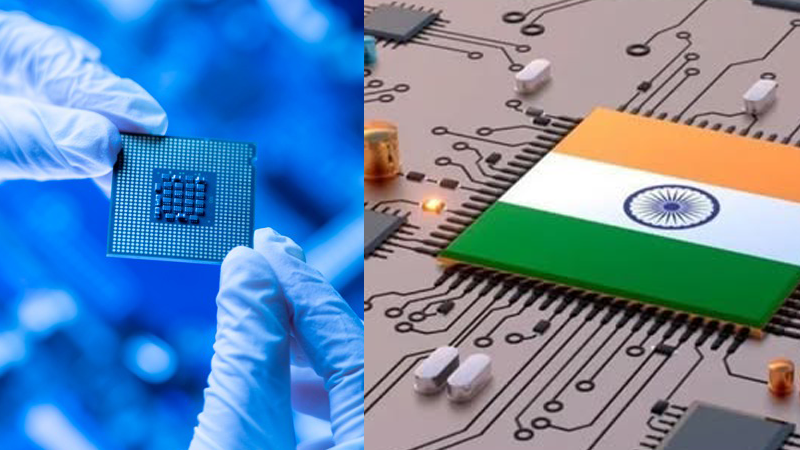
The government’s decision to open applications under Semicon India 2.0 and simultaneously clear 12 electronics component projects worth ₹7,503 crore marks a measured but important step in India’s long march toward semiconductor self-reliance. Union Minister Ashwini Vaishnaw’s launch of the Semicon 2.0 portal for three key pillars—machines and materials, additional fabrication units, and ATMP/OSAT facilities—signals that New Delhi is no longer content with merely attracting assembly plants. It is now deliberately targeting the deeper, more difficult layers of the electronics value chain. Semicon 2.0 carries a substantial outlay of ₹1.27 lakh crore. Unlike its predecessor, which focused heavily on fabrication, the new programme places equal emphasis on equipment, specialty materials, packaging, design, R&D and talent. This is a recognition of a hard truth: a country cannot build a sustainable semiconductor industry by importing the very machines and chemicals that make chips. The simultaneous approval of 12 projects under the Electronics Components Manufacturing Scheme, covering copper foil, cathode active materials, specialty ceramics, multi-layer PCBs and heat sinks, is therefore significant. These are not glamorous end-products; they are the quiet building blocks without which fabs remain dependent on foreign supply chains. The numbers are encouraging. The latest tranche is expected to generate production worth ₹39,045 crore and create over 7,000 direct jobs across seven states. Cumulatively, ECMS has now sanctioned 118 projects with projected investment of ₹77,051 crore. Geographical spread—Gujarat, Karnataka, Tamil Nadu, Uttar Pradesh and others—also helps avoid the concentration risks that have plagued previous industrial policies. Yet caution is warranted. Semiconductor manufacturing is capital-intensive, technology-sensitive and slow to yield results. India still lacks a deep pool of specialised talent, reliable access to high-purity chemicals and gases, and the patient capital that such projects demand. Global competition remains intense, and geopolitical shifts can quickly alter supply-chain calculations. The government must therefore resist the temptation to measure success merely by the number of applications approved. Execution, technology transfer, and the creation of genuine domestic capability will be the real tests. If implemented with discipline, Semicon 2.0 and the expanding ECMS can gradually reduce India’s chronic dependence on imported electronics components. More importantly, they can position the country not just as a manufacturing destination but as a meaningful player in the global semiconductor ecosystem. The foundation is being laid. Whether a robust industry rises on it will depend on sustained policy focus, industry seriousness, and the ability to convert announcements into operational factories.
Paraguay’s Banking Collapse and the Fragility of Power
The impeachment of President Santiago Peña by Paraguay’s Senate, followed by the swift swearing-in of former Vice President Pedro Alliana, is a stark reminder of how quickly political authority can unravel when public trust in financial institutions collapses. What began as a regulatory intervention into the digital lender Ueno Bank has escalated into one of the most dramatic leadership crises in Paraguay’s recent democratic history.
Ueno Bank, which served nearly three million customers in a country of just over six million people, was placed under resolution after its solvency ratio fell critically low. Millions of depositors suddenly found themselves locked out of their savings, including substantial public pension and institutional funds. The scale of the disruption alone would have been politically explosive. The fact that Peña had held shares in the bank’s holding company until 2025, and had appointed a former Ueno executive to head the Central Bank, transformed a financial failure into a full-blown institutional crisis.
The Senate’s near-unanimous decision to remove Peña rather than simply accept his resignation was deliberate. By convicting him of dereliction of duty, lawmakers stripped him of the lifetime Senate seat and the legal immunity that former presidents traditionally enjoy. This choice signals that Paraguay’s political class, including significant elements of the ruling Colorado Party, concluded that institutional accountability required more than a quiet exit.
Alliana’s assumption of the presidency restores constitutional continuity, but it does not automatically restore confidence. Depositors still await clarity on when, and whether, their funds will be fully recovered. The new administration faces the dual challenge of stabilising the financial system while navigating the legal and political aftermath of the scandal. Criminal investigations into conflict of interest, influence peddling and the mishandling of public resources are already under way.
This episode exposes deeper vulnerabilities. Rapid growth of digital banking, concentrated public deposits, and insufficient regulatory distance between political power and private finance create systemic risk. Paraguay is not unique in this regard, but the speed with which the crisis toppled a sitting president demonstrates the high political cost of regulatory failure.
For democracy in the region, the test is whether institutions can both hold leaders accountable and protect ordinary citizens from the consequences of elite mismanagement. Alliana has pledged full compensation for depositors. Delivery on that promise, along with genuine reforms to oversight and conflicts of interest, will determine whether this crisis becomes a moment of institutional strengthening or merely another cycle of political rupture.

 SAS Kirmani
Most Popular

Speed of light: The cosmic limit that shapes our universe
September 17, 2025
Beats did announce something, after all
September 17, 2025