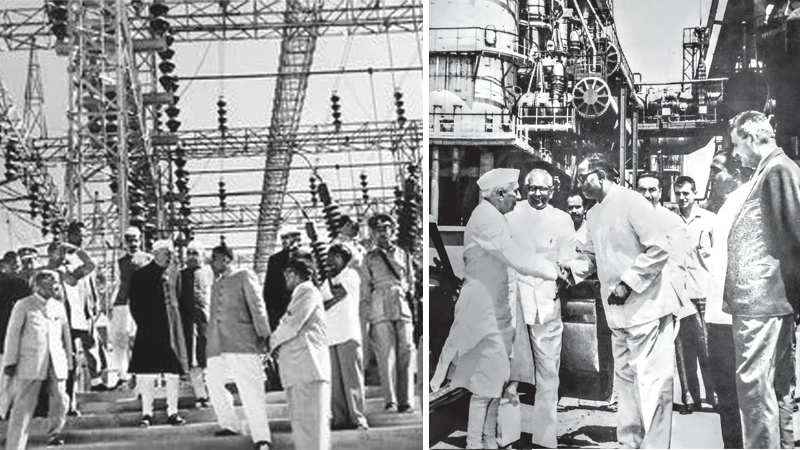
From 'Garibi Hatao' to Poverty Reduction: India's Long Journey Towards Economic Dignity

Editorial
Three Tests of Governance: Federalism, Clean Air and the Changing Political Landscape of America
Democracy, constitutional governance and public accountability are being tested simultaneously on different fronts. In India, the Supreme Court’s recent observations on states’ taxation powers have brought the question of fiscal federalism into focus. Meanwhile, the worsening air pollution in Delhi-NCR once again exposes the gap between policy announcements and effective implementation. On the international front, the 2026 US midterm elections have produced a significant political shift, with the Democratic Party securing control of both chambers of Congress. These developments, although different in nature, raise a common question: how effectively are governments responding to constitutional responsibilities, public concerns and changing political realities?
Fiscal Federalism and the Constitutional Balance
The Supreme Court’s recent ruling concerning the power of states to impose additional sales tax, surcharge or cess under the pre-GST taxation framework is significant from the perspective of India’s constitutional federalism.
A seven-judge Constitution Bench, headed by Chief Justice Surya Kant, examined a legal controversy that had remained unresolved for nearly three decades. The Court clarified that the 1974 judgment in S. Kodar v. State of Kerala, recognising the power of states to impose additional sales tax calculated as a percentage of existing sales tax, continued to hold the field. However, it also observed that the larger reference had become academic following the introduction of GST in 2017 and subsequent changes in the relevant taxation laws.
The judgment deserves attention because taxation is not merely a mechanism for collecting revenue; it is also an important instrument of governance. India’s Constitution distributes legislative and financial responsibilities between the Union and the states. States must have adequate financial resources to fulfil their obligations relating to education, healthcare, infrastructure, agriculture and social welfare.
The introduction of GST created a new system of indirect taxation based on cooperation between the Centre and the states. However, cooperative federalism should not mean weakening the financial autonomy of states. The GST Council must continue to function as a forum for genuine consultation, consensus-building and equitable distribution of fiscal responsibilities.
The larger challenge is to maintain a balance between national economic integration and the financial independence required by state governments.
Delhi’s Toxic Air: A Failure of Collective Responsibility
While constitutional questions occupy the highest judicial forums, ordinary citizens in Delhi-NCR are confronting a more immediate threat: deteriorating air quality.
On November 5, Delhi’s Air Quality Index was reported at 377, placing it in the Very Poor category. Several monitoring stations recorded even higher readings, while parts of the National Capital Region experienced Severe pollution levels. The Commission for Air Quality Management has issued notices to officials in Punjab over their failure to adequately control stubble-burning incidents.
However, it would be misleading to treat stubble burning as the only explanation for Delhi’s pollution crisis. Vehicular emissions, construction dust, industrial activities, waste burning, road dust and unfavourable meteorological conditions collectively contribute to the problem.
The crisis exposes the limitations of fragmented administrative responsibility. Delhi, Haryana, Punjab, Uttar Pradesh and the Union Government cannot continue approaching air pollution as separate territorial problems. Air does not recognise political boundaries, administrative jurisdictions or party affiliations.
The right to life under Article 21 of the Constitution has consistently been interpreted by the Supreme Court to include the right to a clean and healthy environment. This constitutional principle must translate into measurable public policy.
Emergency restrictions may provide temporary relief, but they cannot replace a long-term strategy. Cleaner public transport, effective traffic management, industrial emission controls, scientific waste disposal, alternatives to crop-residue burning and strict enforcement of environmental regulations must become integral elements of governance.
Most importantly, accountability should extend beyond issuing notices and conducting meetings. Citizens deserve measurable improvements in the quality of the air they breathe.
America’s Political Shift and Its Global Implications
The third major development comes from the United States, where the November 3 midterm elections have produced a significant change in the balance of political power.
According to Associated Press reporting, Democrats have secured control of both the House of Representatives and the Senate, ending unified Republican control of Congress. The results represent a substantial setback for President Donald Trump and his administration.
The election outcome reflects a combination of domestic and international concerns, including inflation, the cost of living, public dissatisfaction with governance and the consequences of the continuing conflict involving Iran.
The significance of the result extends beyond party politics. The American constitutional system is based on institutional checks and balances. Congressional control by a party different from the President’s can alter the legislative environment, increase scrutiny of executive decisions and influence budgetary and foreign-policy debates.
For President Trump, the immediate challenge will be to govern in an environment where legislative support can no longer be taken for granted. Democrats, meanwhile, will have to demonstrate that electoral gains can translate into constructive legislative action rather than political confrontation alone.
The implications for international relations could be considerable. Congressional scrutiny may affect defence expenditure, sanctions, foreign assistance, trade policy and America’s engagement with international conflicts.
For India, the changing political equation in Washington requires careful diplomatic engagement. India-US relations have developed through cooperation in defence, technology, trade, education and strategic affairs. These relationships are supported by institutional interests that extend beyond individual administrations.
Nevertheless, disagreements over trade, immigration, tariffs and geopolitical priorities may receive renewed attention. India’s diplomatic approach must therefore remain pragmatic, independent and guided by its national interests.
The Middle East also deserves particular attention. Any reassessment of American policy towards Iran, Israel and the wider region could influence energy security, international trade and regional stability. India, with its substantial economic and strategic interests in West Asia, cannot remain indifferent to these developments.
Governance Must Be Measured by Public Welfare
These three developments reveal different dimensions of the same democratic challenge.
In India, constitutional federalism requires a fair balance between the Centre and the states. Environmental governance demands cooperation and accountability across administrative boundaries. In the United States, electoral democracy has demonstrated the ability of voters to alter the political balance and strengthen institutional checks on executive authority.
Ultimately, the success of democracy cannot be measured merely through electoral victories, judicial pronouncements or government announcements. It must be assessed through the everyday experiences of citizens.
A constitutional ruling must strengthen clarity and the rule of law. Environmental policies must produce cleaner air and healthier lives. Electoral mandates must lead to responsible governance and institutional accountability.
Whether in New Delhi or Washington, the fundamental expectation remains the same: power must be exercised responsibly, institutions must function independently, and public welfare must remain at the centre of governance.
 SAS Kirmani
Most Popular

Speed of light: The cosmic limit that shapes our universe
September 17, 2025
Beats did announce something, after all
September 17, 2025