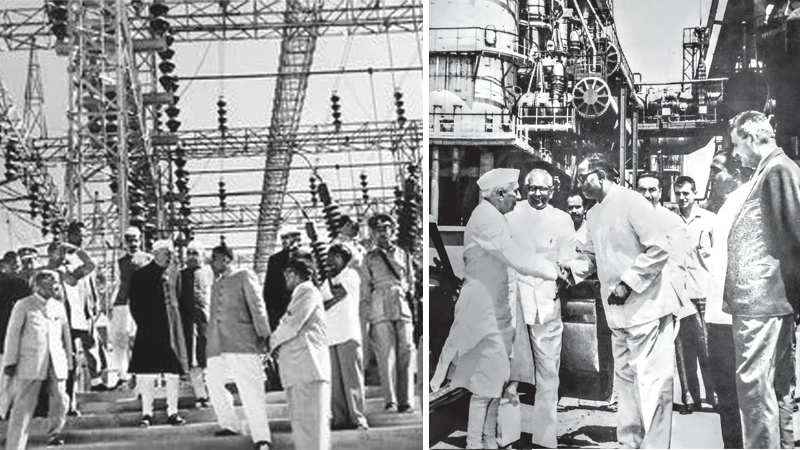
From 'Garibi Hatao' to Poverty Reduction: India's Long Journey Towards Economic Dignity

Editorial
Rhetoric, Responsibility and the Call for Debate
Rahul Gandhi’s challenge to Prime Minister Narendra Modi for an open debate on the charge of “foreign help” marks another escalation in an already polarised political climate. Coming days after the INDIA bloc’s high-decibel protest against the Election Commission, the Leader of the Opposition has alleged that Modi’s rise to and retention of power was aided by external forces. The accusation is serious. In a democracy, such claims demand either rigorous evidence or the discipline of restraint.
Allegations of foreign interference in domestic politics are not new in Indian history. They have been levelled across party lines over decades. Yet their casual deployment in contemporary discourse carries particular risk. When a senior opposition leader frames the sitting Prime Minister’s legitimacy in terms of external patronage, the charge goes beyond policy disagreement. It questions the very foundation of electoral mandate and national sovereignty. If the claim rests on specific intelligence, financial trails or diplomatic evidence, those must be placed before the public and Parliament with clarity. Vague assertions, however rhetorically potent, weaken rather than strengthen accountability.
Equally, the response from the ruling side cannot be limited to dismissal or counter-allegation. A Prime Minister who commands a parliamentary majority and projects India as a confident global power has both the platform and the responsibility to confront such charges directly. Accepting or rejecting a debate is a political choice; transparency about the substance of the allegation is a democratic obligation. Silence or scorn only allows the charge to linger in the public mind.
The deeper problem is the quality of political conversation itself. India’s democracy thrives when parties contest ideas, governance records and institutional integrity. It frays when every dispute is reduced to questions of national loyalty or foreign conspiracy. The recent confrontation over electoral rolls already strained public trust in the Election Commission. Layering accusations of external manipulation on top of that dispute further corrodes the shared ground on which democratic competition must rest.
A genuine debate, if it occurs, should be structured, evidence-based and focused on verifiable claims rather than theatrical confrontation. The public deserves clarity, not another round of competitive rhetoric. Political leaders on all sides must recognise that the ultimate casualty of perpetual institutional distrust is not one party or leader, but the legitimacy of the democratic process itself. In a country as diverse and contested as India, the strength of its politics will ultimately be measured not by the sharpness of its accusations, but by the seriousness with which it examines them.
Delhi’s Air Emergency and the Limits of Seasonal Fixes
Delhi’s Air Quality Index has once again crossed into the ‘very poor’ category, touching 324. In response, the Commission for Air Quality Management has invoked Stage-II of the Graded Response Action Plan. Construction activities face tighter curbs, older vehicles are restricted, and other pollution-control measures have been activated. The announcement is familiar. The crisis is not new. What remains constant is the gap between emergency response and lasting solution.
Every winter, the same sequence unfolds. Stubble burning in neighbouring states, vehicular emissions, industrial activity, dust from construction, and unfavourable meteorological conditions combine to trap pollutants over the National Capital Region. The Graded Response Action Plan was designed precisely for this cyclical emergency. Stage-II restrictions are necessary and welcome. They reduce incremental pollution when the air is already toxic. Yet they are reactive by design. They manage symptoms after the damage has begun rather than preventing the conditions that make every November predictable.
The human cost is measured in more than AQI numbers. Children, the elderly, and those with respiratory conditions pay the highest price. Outdoor workers, delivery personnel, and daily wage earners have little choice but to breathe the air that policymakers discuss in committee rooms. Hospitals see a surge in patients. Schools debate closures. Productivity falls. The economic and health burden is real and recurring.
Responsibility is shared and therefore often diluted. Farmers in Punjab and Haryana face genuine constraints in managing crop residue. Delhi’s own vehicle density, construction activity, and industrial emissions remain significant contributors. Neighbouring states and the Centre must coordinate more effectively on stubble management, public transport expansion, and cleaner industrial standards. Enforcement of existing rules on construction dust and diesel vehicles has been inconsistent. Technology and incentives for alternative farming practices exist, yet scale and timely implementation lag.
Emergency measures under GRAP buy time. They do not rewrite the structural equation. Long-term improvement requires sustained investment in public transport, cleaner fuels, industrial emission controls, and agricultural alternatives that do not depend on annual firefighting. It also requires political will that treats clean air as a year-round priority rather than a seasonal embarrassment. Delhi’s residents have grown weary of the annual spectacle of alarms and temporary restrictions. What they need is a governance approach that treats breathable air as a basic public good, not a crisis to be managed every winter. Until that shift occurs, Stage-II will continue to be invoked, and the air will remain very poor.
 SAS Kirmani
Most Popular

Speed of light: The cosmic limit that shapes our universe
September 17, 2025
Beats did announce something, after all
September 17, 2025