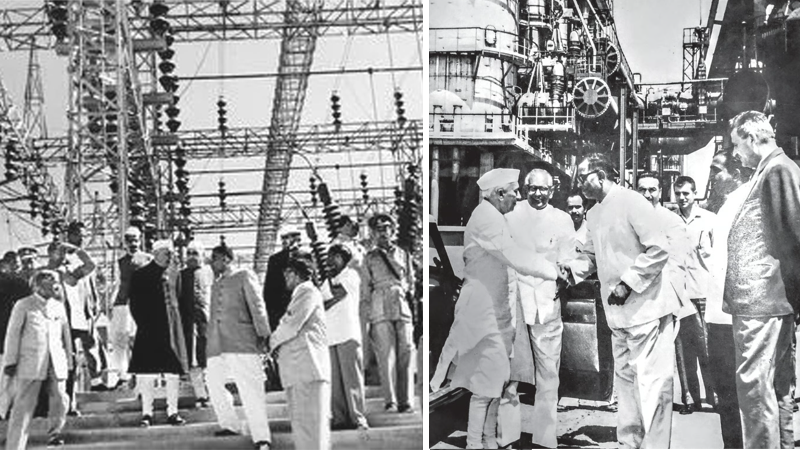
Meadows Foundation Trust Honours Excellence, Service and Human Endeavour

Editorial
Securing the Strait – Saudi Arabia’s Calculated Risk in Yemen
Saudi Arabia’s reported plans for a military offensive against Iran-backed Houthi forces in Yemen mark a decisive shift in a conflict that has long simmered but now threatens global commerce. According to regional and Western officials speaking to Reuters, Riyadh is preparing an operation—expected in the coming weeks—aimed primarily at reclaiming control of the Bab el-Mandeb Strait, the narrow gateway linking the Red Sea to the Indian Ocean.
The catalyst is clear. In September, Houthi advances along Yemen’s western coast, including the seizure of key coastal areas and influence over Perim Island, gave the group effective leverage over one of the world’s most critical shipping chokepoints. With the Strait of Hormuz already disrupted by broader Middle East tensions, Bab el-Mandeb has become even more vital for oil and cargo flows. Saudi officials have concluded that meaningful peace talks with the Houthis are impossible while the militants hold this strategic prize.
The proposed operation would be led on the ground by Yemeni government forces under Riyadh’s oversight, supported by Saudi airstrikes. Two main options are under consideration: a focused coastal push to secure the strait itself, or a broader multi-front campaign involving simultaneous attacks in provinces such as Al-Bayda, Marib, Taiz, and Al-Jawf. Depending on the scale, more than 100,000 Yemeni troops could be mobilised. The United States is providing intelligence support, while other partners offer defensive aid, but no direct foreign combat role is anticipated.
This is not a return to the large-scale 2015 intervention. It appears more limited and pragmatic, driven by the need to restore freedom of navigation and reduce the Houthis’ ability to disrupt shipping or threaten Saudi infrastructure. Yet the risks are substantial. Yemen’s forces remain fragmented, the humanitarian cost of renewed fighting could be severe, and any escalation risks drawing in wider regional dynamics linked to Iran.
Riyadh’s calculation is understandable. Leaving the Bab el-Mandeb under Houthi control grants a non-state actor disproportionate global influence at a time when energy markets are already strained. Securing the strait could stabilise shipping lanes, ease pressure on oil prices, and create space for eventual negotiations from a stronger position.
Still, military action alone rarely delivers lasting solutions in Yemen. Success will depend not only on battlefield gains but on careful planning to minimise civilian harm, maintain international support, and pair any offensive with a credible political track. The coming weeks will test whether Saudi Arabia can reclaim a vital maritime artery without reigniting a full-scale war that the region can ill afford.
The world has a stake in the outcome. A secure Bab el-Mandeb benefits global trade; prolonged instability benefits no one.
Tapping the Reserves – A Necessary but Temporary Fix for the Fuel Crisis
The G7’s decision to release 100 million barrels of oil and diesel from strategic reserves marks a pragmatic, if reactive, response to a deepening energy crisis. Coordinated through the International Energy Agency and announced after a leaders’ videoconference chaired by French President Emmanuel Macron, the release will begin immediately and unfold over four months, with a substantial front-loaded diesel component in the first 20 days.
This move comes under clear pressure from US President Donald Trump, who had publicly urged European nations to draw down their “heavily stocked” diesel inventories and even floated the possibility of restricting American diesel exports. Diesel prices in the United States had reached record levels, threatening households, trucking, agriculture and industry ahead of the November midterm elections. The underlying cause is the sharp disruption to global oil flows triggered by Middle East tensions, particularly the conflict involving Iran and related threats to key shipping routes.
The G7 statement frames the release as the fulfilment of earlier commitments, building on the large emergency drawdowns authorised in March. It also includes a commitment to avoid export restrictions among member countries and a call for all producers to refrain from measures that could worsen market strains. Markets reacted quickly, with European diesel futures easing after the announcement.
The logic is straightforward. Strategic petroleum reserves exist precisely for moments of acute supply stress. Releasing barrels into the market can help cool prices, ease pressure on consumers and buy time while longer-term supply responses take effect. In that sense, the decision is both responsible and overdue.
Yet it is also a reminder of deeper vulnerabilities. Emergency stock releases are temporary bridges, not structural solutions. They do not restore damaged refining capacity, resolve geopolitical risks in the Middle East, or address the chronic tightness that has developed in diesel markets. Once the barrels are gone, the underlying imbalance remains. Over-reliance on such measures risks depleting the very buffers needed for the next crisis.
Moreover, the political optics are unavoidable. Trump’s public pressure and subsequent claim of credit illustrate how energy policy can become entangled with domestic electoral calendars. European leaders, while cooperating, must balance solidarity with allies against the need to protect their own industrial competitiveness and energy security.
In the short term, the G7 release should provide measurable relief at the pump and in freight costs. In the longer term, it underscores the urgency of diversifying supply, accelerating refining recovery, and reducing exposure to single-point geopolitical shocks. Strategic reserves can cushion the blow; they cannot substitute for a more resilient energy system.
 SAS Kirmani
Most Popular

Speed of light: The cosmic limit that shapes our universe
September 17, 2025
Beats did announce something, after all
September 17, 2025