Editorial
Labour Day 2026: Bridging the Wage Gap for Sustainable Industrial Peace
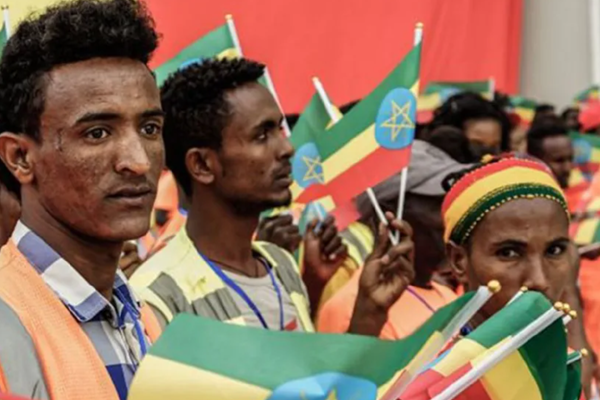
As India observes May Day on 01 May 2026, coinciding with Buddha Purnima and Maharashtra Day, the spotlight falls on the recent factory workers’ protests in Noida and other industrial hubs in the National Capital Region (NCR). Thousands of workers took to the streets in mid-April, blocking roads, demanding higher wages, an eight-hour workday, and better conditions. Protests turned violent in places, with vehicles torched and police resorting to tear gas and arrests. The unrest, though contained by an interim wage hike from the Uttar Pradesh government, exposes deep fault lines in India’s labour ecosystem amid rising living costs.
The immediate trigger was a stark disparity with neighbouring Haryana, which announced a significant 35% increase in minimum wages. In contrast, wages in Noida and parts of Uttar Pradesh had remained stagnant for years—often around ₹11,000–15,000 per month for unskilled and semi-skilled workers putting in 10–12 hour shifts, six or seven days a week. After deductions for PF and ESI, take-home pay frequently dipped below ₹10,000, insufficient for NCR’s high rents (₹4,000–5,000 for basic rooms), food, and fuel. The ongoing US-Iran conflict has exacerbated global energy prices, pushing up costs of LPG, transport, and essentials, making the squeeze on workers even tighter.
Uttar Pradesh responded with a retrospective 21% hike effective from April 1, 2026, raising unskilled wages in Noida-Ghaziabad from roughly ₹11,313 to ₹13,690 per month, with corresponding increases for semi-skilled and skilled categories. While this provided some relief, many workers view it as inadequate against demands for ₹18,000–20,000 monthly minimums and strict adherence to eight-hour norms with proper overtime. Haryana’s higher benchmark highlighted how uneven state-level revisions create resentment and migration pressures within the same economic region.
These protests are not isolated. They reflect broader challenges: slow implementation of labour codes, heavy reliance on contractual and informal labour, and the erosion of real wages due to inflation outpacing nominal revisions. Manufacturing hubs like Noida, home to electronics, garments, and auto components, are critical to India’s export ambitions and “Make in India” goals. Yet, when workers feel their dignity and basic needs are compromised, productivity suffers, investor confidence wavers, and social harmony is threatened.
On this Labour Day, the message is clear. Governments and industry must move beyond reactive hikes and law-and-order responses. A sustainable path requires periodic, evidence-based wage revisions linked to regional cost-of-living indices, effective enforcement of working hours and safety standards, and greater formalization with social security nets. Employers, especially MSMEs, need targeted support—through skill development, productivity incentives, or tax relief—to absorb higher wage bills without losing competitiveness.
Workers, on their part, deserve recognition that long-term gains come from dialogue, skill upgradation, and partnership rather than disruption. Bridging the wage gap is not just about fairness; it is essential for building a resilient, inclusive economy where labour shares in the fruits of growth. Ignoring these tensions risks repeating cycles of unrest. True celebration of Labour Day lies in translating May Day slogans into concrete, collaborative reforms that uphold the dignity of every worker while strengthening India’s industrial future.
Heading: A Homecoming of Faith – The Bnei Menashe’s Journey Fulfilled
Once again, the ancient yearning of a lost tribe finds its shores. The recent arrival of a new wave of Bnei Menashe immigrants from India’s Northeast marks not merely a demographic statistic, but a profound spiritual milestone. As part of a 2026 plan to relocate approximately 6,000 community members by 2030, Israel is witnessing the quiet but determined return of its exiled children from the borderlands of Manipur and Mizoram.
The Bnei Menashe, who claim descent from the tribe of Manasseh, have for centuries clung to the rituals of Judaism—observing the Sabbath, keeping kosher dietary laws, and dreaming of Zion—despite being cut off from the global Jewish mainstream. Their journey is a testament to resilience. After their formal recognition as descendants of Israel by the Sephardic Chief Rabbi in 2005, thousands have already made aliyah. Now, this accelerated five-year plan promises to bring nearly all remaining community members home.
However, this wave arrives at a delicate moment. Israel remains under security and social pressures, and absorbing thousands of new immigrants requires housing, employment, and education infrastructure in peripheral areas. Yet the Bnei Menashe offer something invaluable: a pure, unbroken love for Jewish tradition, honed through decades of isolation. They are among the most passionately Zionist communities in the country, often settling in frontier towns like Nitzan or Kiryat Gat, reinforcing the Jewish presence there.
Critics may question the pace or the cost, but the moral calculus is clear. After 2,700 years of exile, a remnant of Manasseh seeks to sit under its fig tree in peace. To delay or reduce this operation would be to betray the biblical commandment to love the stranger—for these are no strangers, but brothers and sisters. As the 2030 goal draws nearer, Israel must not only open its gates but also its heart, ensuring that the Bnei Menashe are welcomed not as a burden, but as the returning tribe they have always believed themselves to be. Their journey is Judaism’s promise redeemed.

 SAS Kirmani
Most Popular

Speed of light: The cosmic limit that shapes our universe
September 17, 2025
Beats did announce something, after all
September 17, 2025