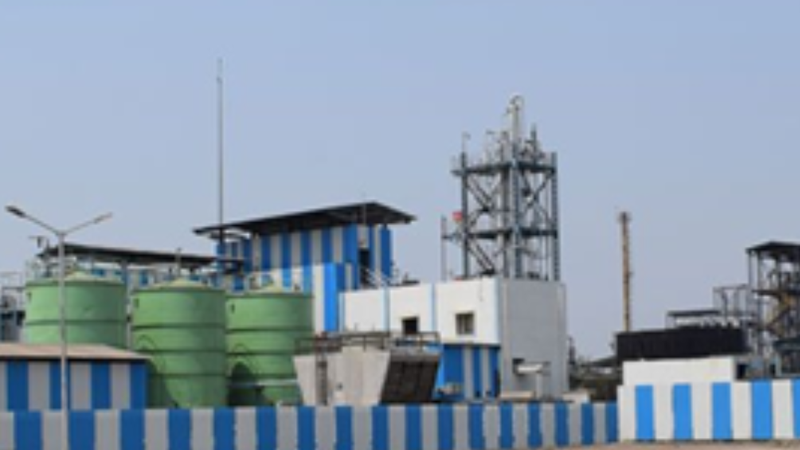
India’s Strategic Silence on Russian Oil: Balancing Autonomy and Pragmatism

Editorial
Trump’s Tariff Tale: Exaggeration Over Diplomacy in South Asia
US President Donald Trump’s latest reiteration of his role in averting an India-Pakistan conflict—delivered at the inaugural Board of Peace event on February 19, 2026—highlights a recurring pattern in his foreign policy narrative: bold claims of personal intervention backed by economic muscle, often at odds with the accounts of the parties involved.
Last summer’s brief but intense military standoff between the two nuclear-armed neighbors, sparked in May 2025 following cross-border incidents and escalating airstrikes, ended in a ceasefire announced on May 10. Trump has repeatedly asserted credit, claiming he phoned leaders Narendra Modi and the Pakistani side, threatening 200% tariffs on both nations’ exports to the US if fighting continued. He now escalates the drama, stating 11 jets were downed (up from earlier figures of five, seven, eight, and ten) and invoking a supposed Pakistani acknowledgment that he “saved 25 million lives.” This comes amid his broader boast of halting eight wars in his second term’s first year.
Yet India’s official position remains firm: the de-escalation was achieved bilaterally through established military channels, specifically direct talks between the Directors General of Military Operations, with no third-party mediation. New Delhi has consistently rejected Trump’s portrayal of US leverage—whether tariffs or phone calls—as decisive, viewing it as an unwelcome attempt to equate the two nations and insert Washington into a bilateral dispute. Pakistan, conversely, has been more open to crediting external facilitation, including from the US, Saudi Arabia, and others, reflecting differing diplomatic incentives.
Trump’s tariff threat, while dramatic, raises questions about feasibility and impact. A 200% duty would devastate trade-dependent sectors in both economies, but the US market’s importance varies—India’s exports face growing scrutiny under Trump’s reciprocal tariff policies anyway. More critically, the escalation’s brevity (days, not weeks) and mutual restraint amid nuclear risks suggest internal calculations and back-channel restraint played larger roles than any single external ultimatum.
This episode underscores a deeper issue in Trump’s approach: a tendency to personalize geopolitics, framing complex regional dynamics as transactions resolved by American deal-making. While economic pressure can influence behavior, crediting tariffs alone oversimplifies South Asian security realities—rooted in Kashmir, terrorism, and historical rivalry—and risks straining ties with India, a key Indo-Pacific partner. By inflating details (jet counts, lives saved) and repeating the claim over 80 times since May 2025, Trump prioritizes domestic optics—portraying himself as the indispensable peacemaker—over diplomatic nuance.
In a multipolar world, effective mediation requires discretion and respect for sovereignty, not public score-settling. Trump’s narrative may rally his base, but it complicates genuine US engagement in South Asia. True peace demands quiet diplomacy, not louder boasts.
United States has positioned itself for a potential military confrontation with Iran
The countdown has begun. With the deployment of two aircraft carrier strike groups and an unprecedented build-up of air power in the Persian Gulf, the United States has positioned itself for a potential military confrontation with Iran. President Donald Trump’s ultimatum—a 15-day window to strike a new nuclear deal or face severe consequences—has transformed a tense diplomatic standoff into a crisis that could ignite the Middle East within days.
This is not merely a show of force. The dispatch of the USS Gerald R. Ford to join the USS Abraham Lincoln, alongside scores of F-22 and F-35 fighter jets and strategic bomber assets, mirrors the scale of the 2003 invasion of Iraq . When combined with Trump’s rhetoric that failure to reach a deal will result in "bad things," the message from Washington is clear: compliance or conflict.
However, the strategy appears less about all-out war and more about the "bloody nose" doctrine. Reports indicate the administration is considering limited, targeted strikes against Iranian military and nuclear facilities—a calibrated shock designed to cripple capabilities without dragging the US into another endless Middle Eastern war . The hope, presumably, is that a humiliated regime will bend to American demands.
This is a dangerous miscalculation. While Iran’s air defenses are reportedly degraded from previous strikes, Tehran retains significant power to project force asymmetrically . Its warning that US bases and assets are "legitimate targets" is not a bluff . A "limited" strike could quickly spiral into a regional conflagration, drawing in proxies across Lebanon, Syria, and Yemen, and potentially closing the Strait of Hormuz—a move that would shatter global oil markets.
Diplomacy, it seems, is being treated as a formality. Indirect talks in Geneva have reportedly made progress, yet Washington has slapped a ticking clock on the negotiations . Ultimatums are tools of coercion, not compromise. By amassing this level of firepower, the US has raised the stakes so high that backing down becomes politically impossible, increasing the likelihood of a conflict neither side claims to want.
As European nations evacuate citizens and Israel prepares for retaliation, the world watches anxiously . The next 15 days will determine whether Trump’s "peace through strength" approach forces Iran to capitulate—or pushes the region into another devastating war.
 SAS Kirmani
Most Popular

Speed of light: The cosmic limit that shapes our universe
September 17, 2025
Beats did announce something, after all
September 17, 2025